
Sprinto vs Vanta: The Compliance Smackdown of 2025
Let’s break down what you’re really getting when you sign up for each tool, and whether either of them is really the right fit for your next audit.
Sprinto vs Vanta: who wins in the compliance management war?
If you’ve ever Googled “SOC 2 compliance tool” and instantly regretted it, congratulations, you’re exactly where you need to be. There are millions of ways to handle your compliance these days: spreadsheets, consultants, checklist software, automated platforms, AI overlords, or sheer denial (not recommended).
But for companies who want to get audit-ready without losing their will to live, two names come up more than most: Vanta and Sprinto.
They both promise to make compliance “simple,” “automated,” and “continuous”, which is ironic because trying to choose between them can feel like being asked to pick the best spreadsheet in Excel. They look the same at first, but dig a little deeper and the differences are very real.
Let’s break down what you’re really getting when you sign up for each tool, and whether either of them is really the right fit for your next audit.
Meet the Contenders: Sprinto vs Vanta at a Glance
Let’s meet our compliance gladiators.
Vanta: The Checklist Champ
Founded in 2018, Vanta was one of the first companies to bring “compliance automation” out of the spreadsheet era and into something you could actually use without therapy. It was born out of YC and quickly became the go-to solution for startups trying to get SOC 2 compliant fast, especially when raising from top-tier VCs who’ve made it a checkbox in their due diligence decks.
Even with tons of competitors, Vanta is still a big player, with about 10,000 customers.
Supports frameworks like SOC 2, ISO 27001, HIPAA, GDPR, and PCI
300+ integrations (from AWS to Okta to... almost everything else)
Known for: Intuitive UI, strong integrations, solid documentation
But here’s the twist: as companies scale, Vanta can feel a bit… checklist-y. It’s great at telling you what needs to be done. But doing it? That’s on you, pal.
Sprinto: The Automation Aficionado
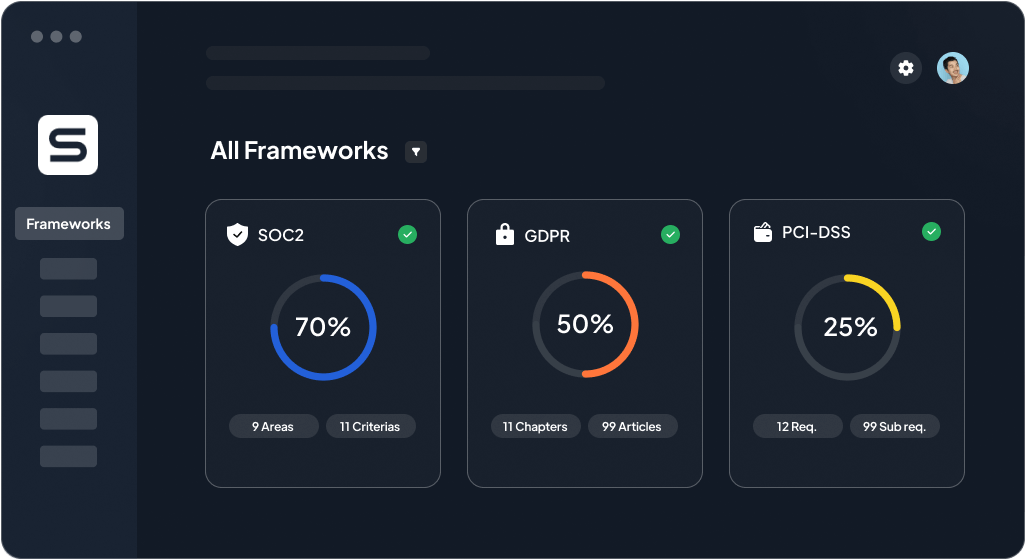
Founded in 2020, Sprinto is the new-ish kid on the block — but they’re not playing catch-up. Instead of just showing you what to do, Sprinto’s goal is to do as much of it as possible for you.
It’s designed for fast-growing, cloud-native teams who want to hit compliance milestones without stopping product work. It’s like having a security program that runs in the background, kind of like a dev-friendly Roomba.
Focus on SOC 2, ISO 27001, HIPAA, GDPR, PCI, CCPA, and CMMC 2.0
Real-time compliance tracking and automated evidence collection
Known for: Great support, deep automation, clear onboarding flows
Sprinto doesn’t just map your controls, it hooks into your systems and validates them automatically. And while it may not have Vanta’s early-mover polish, it’s often favored by engineering-first teams who hate being interrupted.
Feature-by-Feature Breakdown: Sprinto vs Vanta
Choosing a compliance platform is kind of like dating someone from LinkedIn, on paper, they both look amazing. But once you dig in, you realize one’s all about structure and spreadsheets, and the other wants to automate your entire life.
Let’s break down the real differences between Sprinto vs Vanta, so you can swipe right on the one that fits your org best.
Supported Frameworks
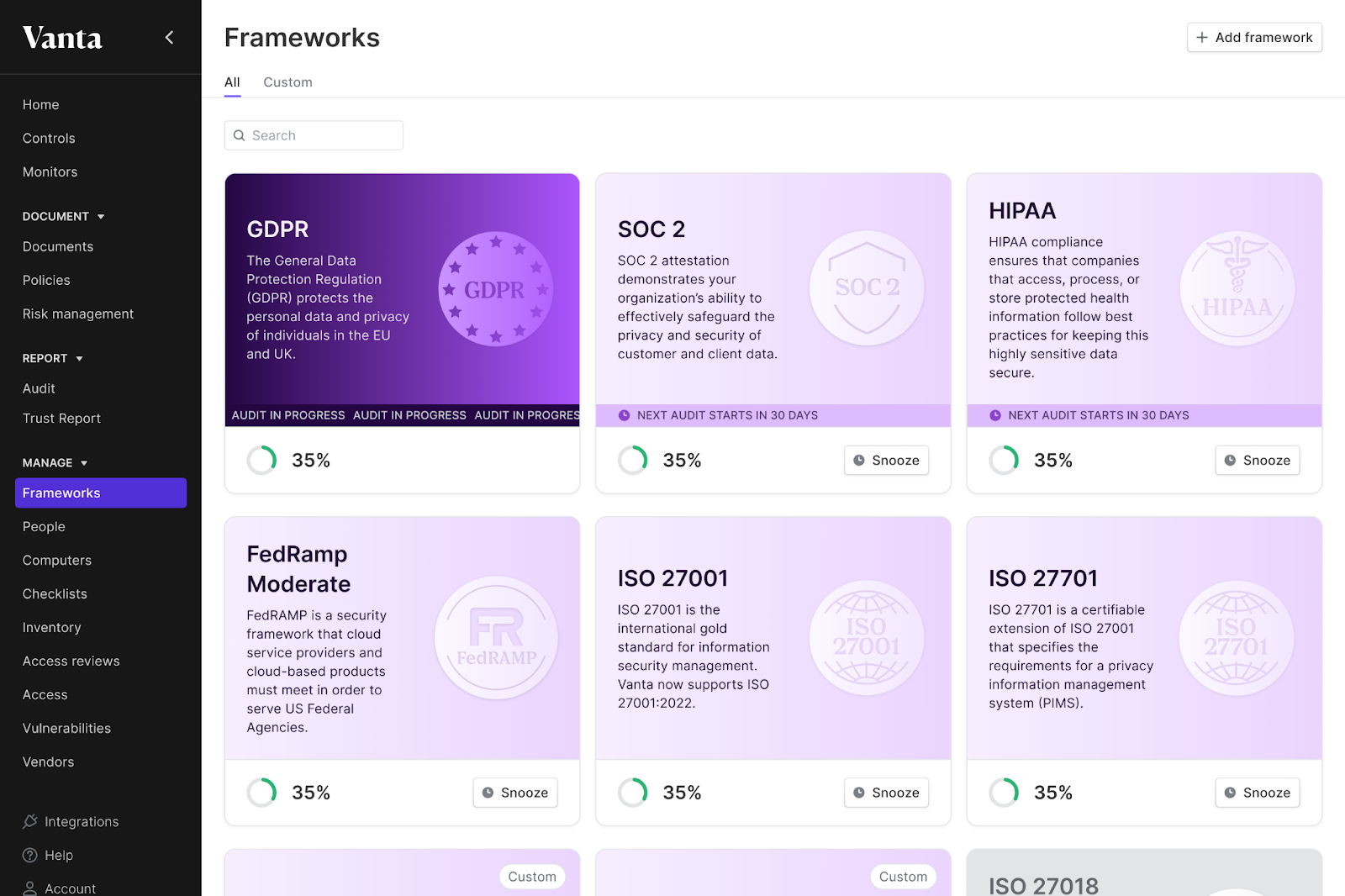
If your compliance needs go beyond just SOC 2, you’ll want to pay attention here.
Vanta covers all the usual suspects: SOC 2, ISO 27001, HIPAA, GDPR, and PCI DSS. It’s a solid pick for startups and fast-growing teams who need to get compliant yesterday, especially if you’re chasing that next funding round.
Sprinto, meanwhile, goes wide and deep. It supports over 20 frameworks — including the big ones above, plus more niche needs like CCPA and CMMC 2.0. Bonus: its “Magic Mapping” feature means if you’re chasing multiple certifications, Sprinto doesn’t make you repeat yourself. You map once, and it works across frameworks like, well, magic.
Automation & Evidence Collection
This is where things start to separate.
Vanta does help you collect evidence automatically by pulling data from your tools. But once it’s in there, it’s still up to you (or your already-overworked security lead) to validate and organize it for audits.
Sprinto, on the other hand, is built to do more heavy lifting. It continuously monitors your controls, sends real-time alerts when something breaks, and keeps your evidence updated without needing a calendar reminder. It's less “set and forget,” and more “set and go get lunch — we’ve got this.”
Real-Time Monitoring & Risk Management
Both platforms keep an eye on your compliance status in real-time, but how they handle risk is a little different.
Vanta gives you alerts when controls fail and offers visibility into potential risks. But actual remediation? That’s still on your plate.
Sprinto steps it up with more aggressive control tracking and built-in risk visibility tools. You can assign access controls, view policy issues live, and spot trouble before your auditor does. Fixing things is still your job, but you’ll get the heads-up before it snowballs into an “uh-oh” moment.
Integrations & API Access
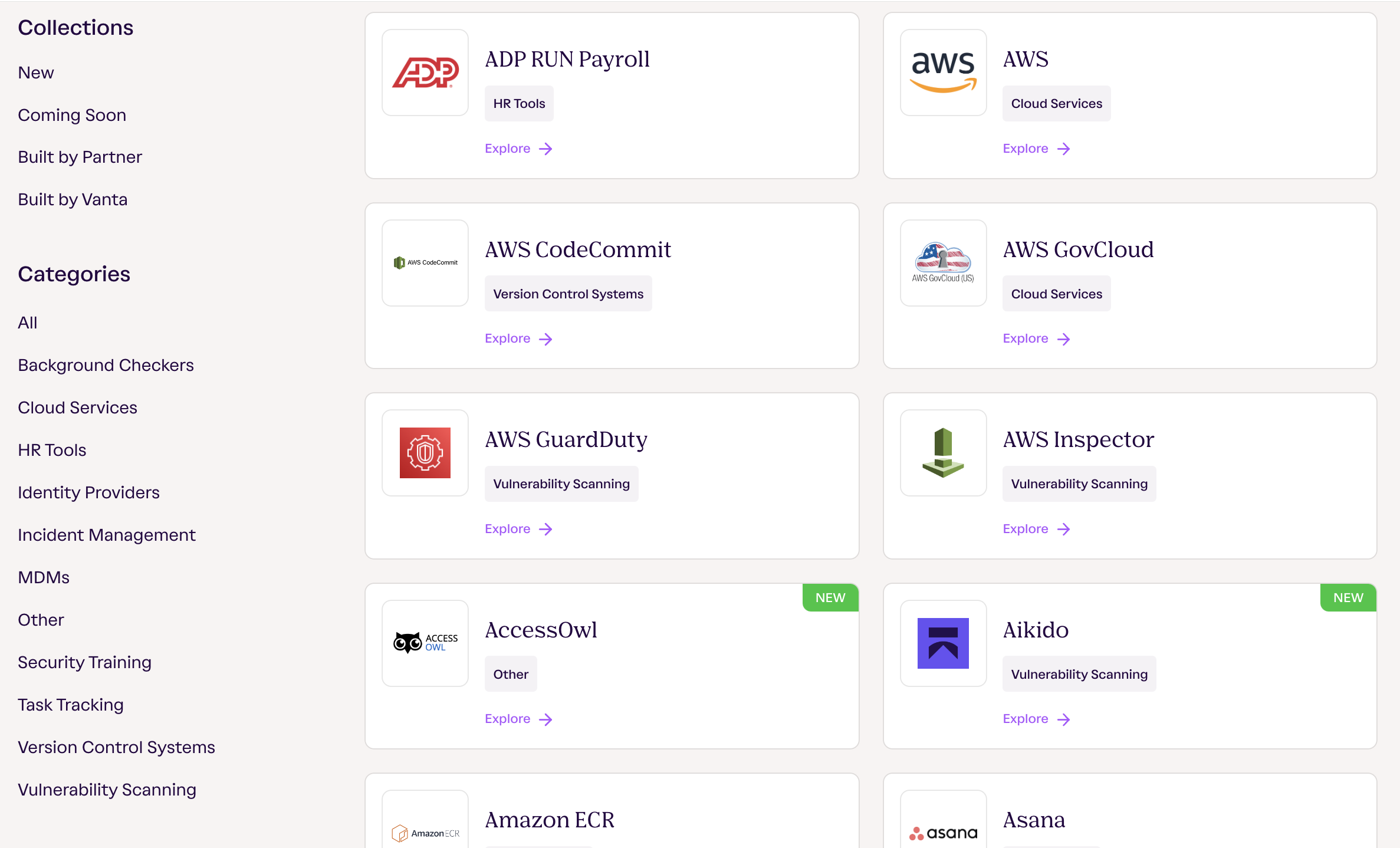
Vanta’s been around longer, and it shows, with over 300 integrations to tools like AWS, GitHub, and Okta. If you’re in a standard startup stack, you’ll feel right at home.
Sprinto isn’t far behind. It plays nice with 200+ apps, and its “one-click” integrations mean setup is fast. Plus, it has solid API flexibility if you need to do something fancy. This category? Basically a tie, unless you need a very niche tool.
Ease of Use & User Experience
Vanta gets serious UX points. The platform is clean, pretty, and doesn’t overwhelm you with too many knobs and levers. For founders and teams new to compliance, it’s a gentle landing. That said, power users sometimes feel boxed in, the simplicity can oversimplify real-world workflows.
Sprinto brings a more structured experience. It’s clean, efficient, and designed to support scale. The onboarding is guided, the dashboards are straightforward, and it’s optimized for people who don’t want to spend their afternoon reading a help doc. Not quite as pretty, but more powerful under the hood.
Market Positioning: Who Are These Tools Actually For?
Even if two compliance tools do “the same thing,” they’re not built for the same people. Just like a Tesla and a Jeep both have wheels but take you on very different rides, Sprinto vs Vanta reveals a deeper philosophical difference in how they approach the market.
Vanta: The Startup Sweetheart

Vanta came out of the gates hard, fast, and friendly. Built in the Y Combinator ecosystem and adopted rapidly by early-stage startups, its brand screams, “We’ve got your back, founder.” If your company’s still in hypergrowth mode, your security policies live in Google Docs, and your team consists of 2 engineers and a very tired CTO, Vanta is appealing.
Its UX is polished, its templates are ready to go, and it integrates with the standard startup stack (AWS, GitHub, Slack, etc.). Vanta positions itself as the compliance tool for scaling startups, especially those racing toward a SOC 2 to please investors.
But this startup glow sometimes dims as companies grow. Several mid-sized teams report that Vanta starts feeling checklist-heavy and light on true automation
Sprinto: The Quietly Powerful Automation Engine
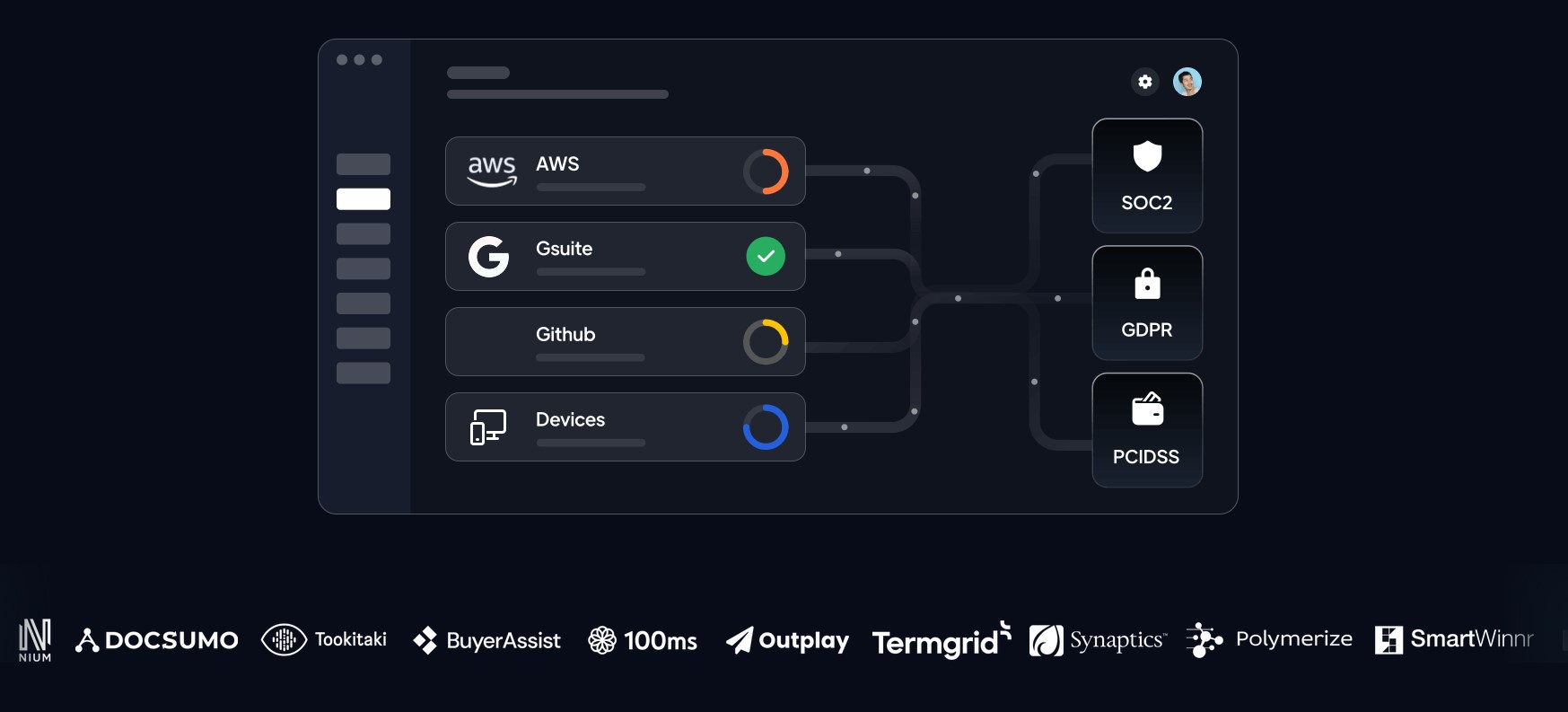
Sprinto doesn’t sell itself as sexy. Instead, it sells itself as automated. It's positioned more for product-focused, cloud-native companies that are past MVP and moving toward enterprise contracts. Their sweet spot? B2B SaaS companies who need security compliance, fast, hands-off, and audit-ready by next quarter.
Sprinto quietly attracts companies that want less clicking and more syncing. It’s popular with security engineers, CTOs, and compliance managers who want depth over dazzle. Compared to Vanta vs Sprinto, Sprinto comes out ahead when it comes to operational control, cross-framework mapping, and hands-off workflows.
Pricing Comparison: Transparency or a Tripwire?
Let’s be real: if pricing isn’t listed clearly on your website, it either means:
You're expensive.
You’re custom.
Or you're hiding something.
With Sprinto vs Vanta, the pricing game plays out just like a SaaS rom-com, lots of “it depends,” plenty of hand-holding, and at least one awkward “contact sales” form. But here’s what we know:
Vanta Pricing
Vanta’s pricing is quote-based, meaning you won’t find exact numbers on their site. But based on customer reports and reviews:
Small teams (10–25 employees): $10K–$20K/year
Mid-size (50–100 employees): $20K–$35K/year
Large orgs w/ multiple frameworks: Up to $80K+/year
And that’s just the platform. Add penetration testing, additional frameworks, or a dedicated success manager, and it gets pricier, faster.
Sprinto Pricing
Sprinto is far more transparent (cue a sigh of relief). Pricing typically starts around:
$6K–$12K/year for single-framework use
$15K–$25K/year for more complex needs or multiple frameworks
Pen testing can be bundled or brought in via partners
One notable bonus: Sprinto tends to include more functionality out of the box — like real-time alerts and automated evidence collection — that might be “add-ons” elsewhere.
Sprinto vs Vanta: Pros & Cons
If you’re tired of sales speak, welcome to the blunt zone. Here’s how Sprinto vs Vanta stack up, the wins, the trade-offs, and what to look out for.
Sprinto: Pros & Cons
Vanta: Pros & Cons
Support, Success & Implementation
Let’s be honest: no one dreams of spending hours on compliance calls, Googling “SOC 2 scoping guide,” or wrestling with Slack threads about access control logs.
So the question isn’t just who has more features, it’s: Who helps you use them without going insane?
Vanta’s Support Experience
Vanta leans toward self-service, great for teams that want to click around, follow pre-set guides, and move quickly. They offer:
Chat and email support
Knowledge base and pre-written policies
Success managers (if you’re on the “bigger” plan)
It’s solid. But it can feel like you’re on your own unless you’re on a higher tier. And while the UI is user-friendly, companies with more complex stacks or legacy setups sometimes feel a bit DIY.
Sprinto’s Implementation Game
Sprinto, by contrast, gets high marks for its guided onboarding. Almost every G2 review sounds like: “They walked us through everything” or “Sprinto’s support is on another level.”
You get:
A dedicated implementation specialist
Weekly check-ins (if needed)
Step-by-step guidance with your actual data
Live alerts when something breaks mid-audit
This difference becomes very real when your audit deadline is 14 days away and your IAM controls start throwing errors.
Alternatives to Sprinto and Vanta: Who Else Is in the Ring?
So far, this guide has been a duel between Sprinto vs Vanta, but let’s be real: there’s a whole compliance royal rumble happening out there.
If neither of these tools hits the sweet spot for you, here are some of the other contenders:
Drata: Probably the biggest name after Vanta. Think of it as the Salesforce of compliance tools, powerful, customizable, and very enterprise-y. Great if you have budget and a security team that speaks fluent ISO.
Secureframe: A more polished middle-ground. Not as automated as Sprinto, but more guidance-driven than Vanta. Often seen as the Goldilocks pick.
AuditBoard: Built for large enterprises with complex GRC needs. If your org has a compliance team with its own office fridge, this might be for you.
TrustCloud: Emphasizes trust, customer transparency, and streamlined vendor management. More boutique, but nicely focused.
EasyAudit: The number one company leading the way in AI-powered automation for compliance strategies. Tap into a powerful suite that handles the heavy lifting of compliance work, from generating policies, to creating risk assessments.
Why Some Companies Are Choosing EasyAudit Instead
After wading through the epic battle of Sprinto vs Vanta, you might be wondering, what if there’s a third way?
One that doesn’t involve:
Chasing down evidence in Slack
Arguing with your CTO about SSO configuration
Spending $40K just to check a compliance box
That’s why a growing number of startups and scaleups are skipping the “SaaS tool with dashboards and to-do lists” phase entirely, and going straight to a fully AI-native platform: EasyAudit.
Here’s why
1. Compliance Officer-as-a-Feature
EasyAudit isn’t just a dashboard. It comes with a built-in AI Compliance Officer, kind of like ChatGPT’s nerdy cousin who knows everything about SOC 2, ISO, HIPAA, and CMMC. It answers questions, maps controls, recommends actions, and flags issues in plain English. No consultants required.
2. Actually Fast Time to Compliance
We’re talking audit-ready in weeks, not quarters. While Vanta and Sprinto both offer automation, EasyAudit takes it further with predictive checklists, live control validation, and one-click policy creation powered by your stack.
One early-stage fintech reported reducing SOC 2 prep time by 42% compared to their previous platform.
3. Real-Time Security + Risk Monitoring
Instead of waiting for something to go wrong, EasyAudit proactively checks controls, flags gaps, and even identifies unknown risks, all in real-time. Think of it like preventative security for your compliance posture.
4. Tailored to Your Stack
No more fighting with templates. EasyAudit adapts to your tools, your workflows, and your business model. It even auto-adjusts policies based on your actual architecture. Finally: compliance that doesn’t make you contort your ops.
5. Predictable Pricing
No surprise upsells. No per-user/device charges. No “contact sales for enterprise quote.” Just a free readiness assessment, followed by a clear, flat rate.
Bonus: You can even calculate your costs upfront using the EasyAudit pricing calculator.
Sprinto vs Vanta vs EasyAudit: Which is Best?
If you scrolled straight here – let’s summarize everything fast:
Vanta is a great pick for early-stage startups that need to get SOC 2 done fast and love a sleek, friendly UI. But keep an eye on the pricing — it scales quickly — and while it automates a lot, you’ll still be doing some manual evidence wrangling.
Sprinto is built for scaling SaaS companies that care more about automation than aesthetics. It’ll get you audit-ready fast, with fewer manual steps and real-time control monitoring. Downsides? Slightly fewer integrations, and the interface isn’t winning any beauty contests.
EasyAudit, on the other hand, is for teams that are ready to ditch dashboards and let AI handle the heavy lifting. It’s newer on the scene, but surprisingly powerful — and especially appealing to lean, fast-moving teams that want fewer meetings, fewer checklists, and faster audits.
Want to see how EasyAudit compares for your specific setup? Get a demo here.
FAQ: You Asked, We Answered
Q: Which is better for SOC 2?Both handle it well. Vanta wins for startups that need hand-holding and a beautiful UI. Sprinto is better for dev teams that want it done yesterday and hate manual steps
Q: Can I migrate mid-framework from Vanta to Sprinto (or vice versa)?Yes, but it’s not painless. You’ll likely need to redo some mapping and documentation. Migration is easier between tools that use common integrations and control templates.
Q: Do I need a consultant with either tool?With Vanta: probably yes, especially if you’re scaling into ISO 27001 or HIPAA.With Sprinto: maybe not, especially if your internal team can follow their onboarding process.With newer platforms like EasyAudit? AI handles more of the mapping, so you may not need external help at all.
Q: Is there a more modern alternative that doesn’t feel like I’m managing a giant checklist?Funny you ask. A few AI-native tools are doing away with traditional dashboards entirely, using real-time monitoring, instant recommendations, and predictive risk scoring. We’ll introduce one of them next.